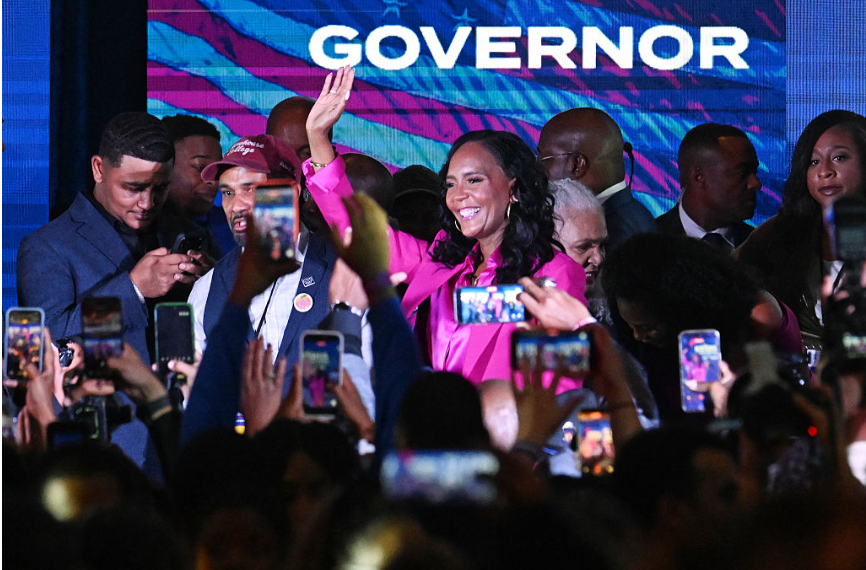
Bottoms triumphed despite the stunning financial edge held by Jackson, who poured more than $100 million of his fortune into his campaign. Jackson’s campaign had spent or reserved more than $200 million in advertising in the general election, compared with the Bottoms campaign’s roughly $1 million commitment, according to October data from the ad-tracking platform AdImpact.
But Bottoms tied Jackson to President Donald Trump, who carried Georgia in 2024 by more than two percentage points but whose popularity among voters has since sharply declined. Jackson said during his primary campaign that he would be Trump’s “favorite governor” if elected and was heard on a recording published by the Atlanta Journal-Constitution saying he believed the National Guard would be at the polls in November. But as the race moved toward the general election, Jackson said he would model himself after outgoing governor Brian Kemp (R), who has clashed with Trump, and denied saying he wanted the National Guard at polling places.
Jackson highlighted his rise from teen in foster care to billionaire and his philanthropic work to support foster families. He attacked Bottoms for rising crime rates in Atlanta during the pandemic, when she was mayor.
On the campaign trail, Bottoms argued that Jackson’s business interests will create conflicts for him as governor, especially on data centers. She pledged to pause their construction if elected.
Bottoms’s win underscores Georgia’s political transformation in the era of Trump. His attempted interference in the 2020 presidential election in Georgia, when he urged the Republican secretary of state to “find” votes, sparked an electoral backlash that propelled two Democrats to the Senate.
Bottoms’s win allows her to shape the state budget with the governor’s line-item veto and create a check on Republican power in the legislature overall, should it stay under GOP control. It also gives her a veto over any GOP-led attempt to redistrict the state.